History

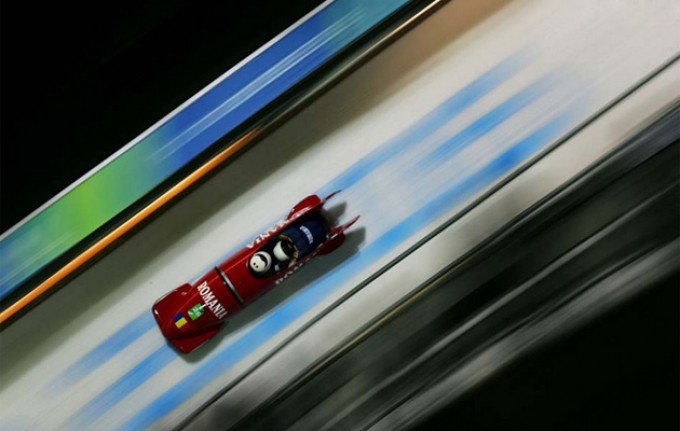
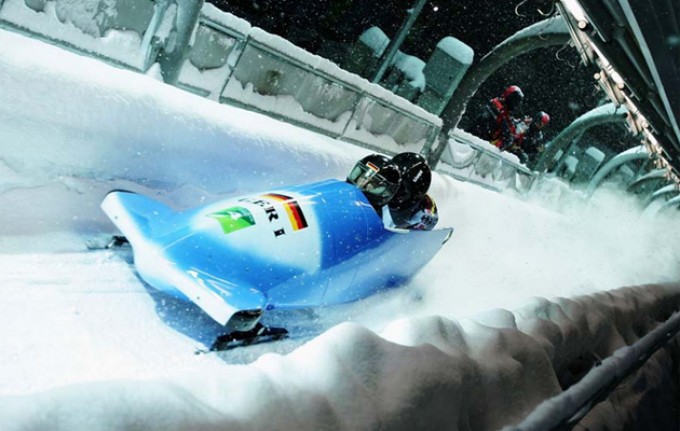
Bobsleigh is a winter sport invented by the Swiss in the late 1860s in which teams make timed runs down narrow, twisting, banked, iced tracks in a gravity-powered sled.

19th century beginnings
The sport of bobsleigh didn’t begin until the late 19th century when the Swiss attached two skeleton sleds together and added a steering mechanism to make a toboggan. A chassis was added to give protection to wealthy tourists and the world’s first bobsleigh club was founded in St Moritz, Switzerland in 1897.

Super heavy
By the 1950s, the critical importance of the start had been recognized and athletes with explosive strength from other sports were drawn to bobsledding. In 1952, a critical rule change limiting the total weight of crew and sled ended the era of the super heavyweight bobsledder and rebalanced the sport as an athletic contest.

Back and forth
In its original form, the first races used skeleton sleds made of wood. However, they were soon replaced by steel sleds that came to be known as bobsleighs because of the way crews bobbed back and forth to increase their speed at the start. Today, the world’s top teams train year-round and compete mostly on artificial ice tracks in sleek high-tech sleds made of fibreglass and steel.

Olympic history
In 1924, a four-man race took place at the first ever Olympic Winter Games in Chamonix. A two-man event was added at the 1932 Lake Placid Games in a format that has remained to the present. The first women’s bobsleigh event – the two-woman bobsled – was held in 2002.

Source: olympic.org

Equipment

Brakes
Brakes are applied by lifting a lever that lowers metal teeth into the ice.

Push handles
The side push handles must be retractable. The rear push handles are not retractable. All push handles are used to push the bob at the start.

Helmet
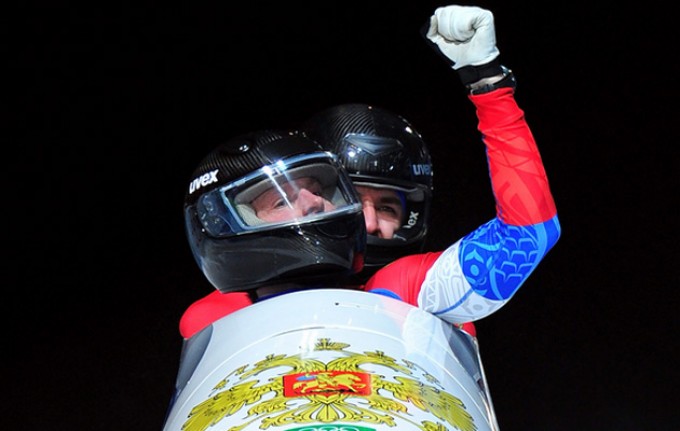
A hightech plastic composite helmet must be worn to prevent head injuries. Many have visors to protect the eyes, or the athlete may choose to wear goggles.

Start shoes
Made of synthetic material, have spikes on the soles for traction during the start push.

Sled
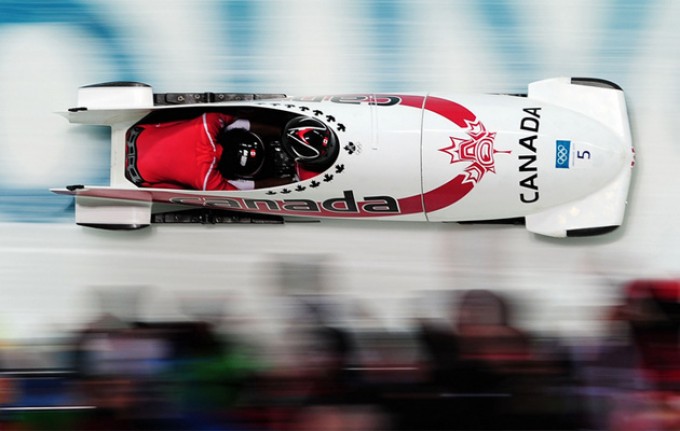
The sled consists of a main hull, a frame, a front and rear axle, and two sets of independent steel runners. The hull, also known as a cowling, is generally constructed of fibreglass and is open to allow team members to board and sit down.

Two-man sled specifications
Two-man sled: Minimum weight (excluding crew): 170kg Maximum weight (including crew and equipment): 390kg(Women’s sled: 340 kg.) Maximum length: 2.70 metres Maximum width: 0.67 metres

Four-man sled specifications
Minimum weight (excluding crew): 210kg Maximum weight (including crew and equipment): 630kg Maximum length: 3.80 metres Maximum width: 0.67 metres

Steering control
The driver controls the sled with his hands and fingers, using rings that are attached by ropes to a steering mechanism.

Source: olympic.org

Glossary

Brakeman
The last person to enter the sled at the start. Known as the brakeman because he or she is responsible for pulling the brake to stop the sled at the end of the run.

Driver
The person who sits in the front of the bobsleigh and steers. Usually the first person to enter the sled at the start.

G-Force
Gravitational force that holds the sled and athletes on the wall of a banked turn. A “G” is equal to the force of gravity. On some tracks, the G-force exerted on an athlete can exceed five Gs. That would make the athlete feel like he or she weighed more than five times their actual weight.

Kreisel
German for circle. A curve which becomes a complete circle by crossing over itself.

Labyrinth
A stretch of track made up entirely of curves, perhaps four or five, with no straight stretch in between.

Line
The precise path which corresponds to the optimum trajectory of the bobsleigh. The driver can gain valuable time by keeping to the trajectory.

Lip
A safety barrier at the top of the track to prevent sleds from going off the track.

Loading
The process during which the athletes enter the sled after the push start.

Omega
A curve which is shaped like the Greek letter of the alphabet.

Push
The bobsleigh is pushed as hard as possible over 50-60m stretch to give it the momentum it needs.

Source: olympic.org