Classic technique
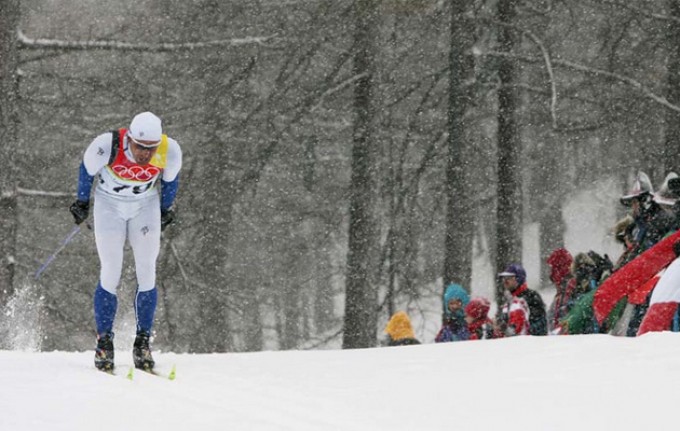
The traditional ski racing technique. Athletes use a diagonal stride in which both skis stay parallel to each other.
Free technique
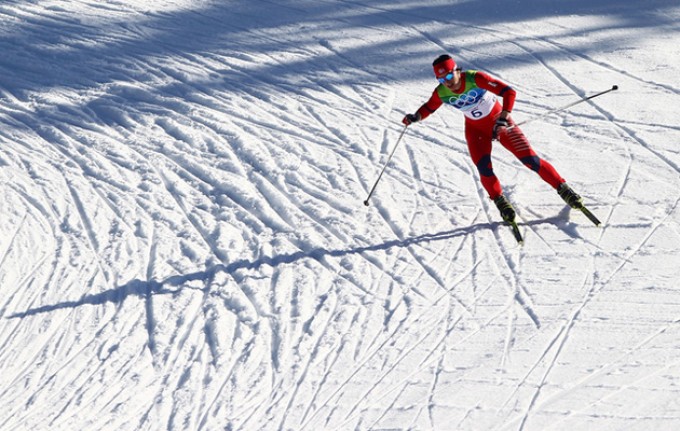
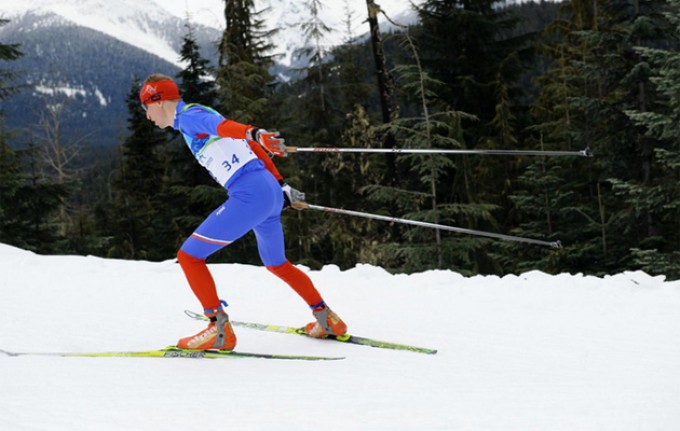
The skating – or free – technique, which was developed in the 1970s, closely resembles the motions of ice skating, where one pushes the inside edge of the ski simultaneously backward and outward at about a 45-degree angle. It usually is faster than classic technique.
Glide wax
Wax used to decrease the friction between the skis and the snow. It is applied to the entire ski in free technique races, but only to the front and rear tips of the skis in classic races.
Grip wax
Also known as kick wax, it increases the friction between the skis and snow to improve traction. It is applied to the middle part of the skis for classic races.
Harries
A ski preparation technique in classic skiing used when kick wax is not appropriate for the conditions. Technicians use a wire brush to roughen the base of the skis.
Mass start
All competitors start together, and the first skier to pass the finish line is declared the winner.
Pursuit start
Pursuit events have a mass start and the athletes use both techniques within the same race. During a pit stop at the stadium after half of the race distance has been completed, the athletes change equipment from the classical to free technique.
Scramble leg
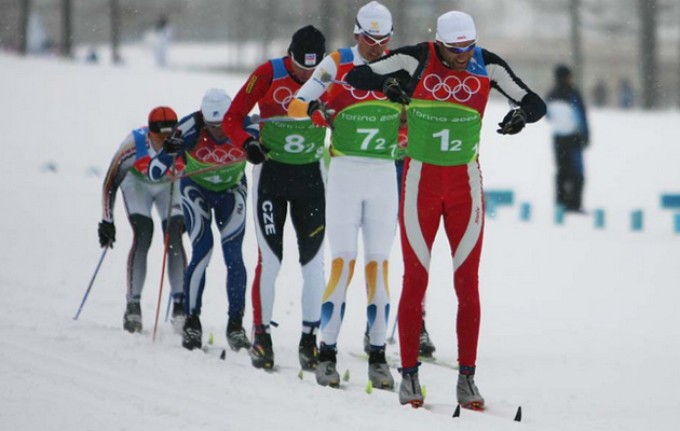
The first leg of a relay race. Named this way because relay races feature mass starts with everyone bunched together.
Staggered start
A start in which skiers leave at set intervals. The winner is the athlete with the best time.
Vertical
An uphill climb.