

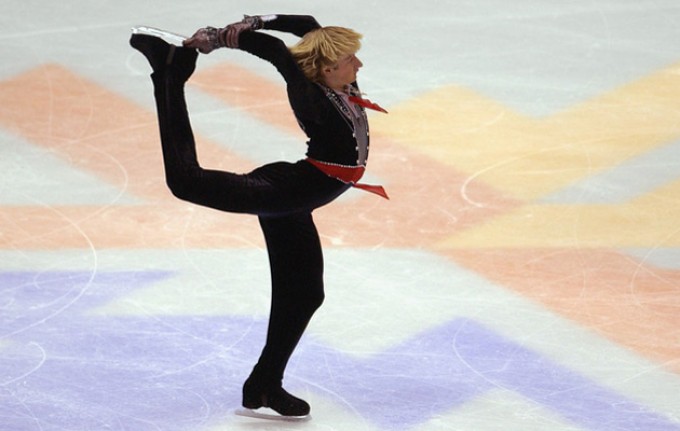
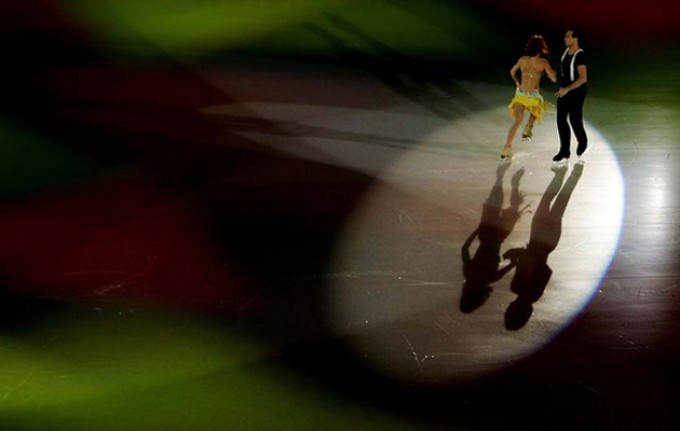
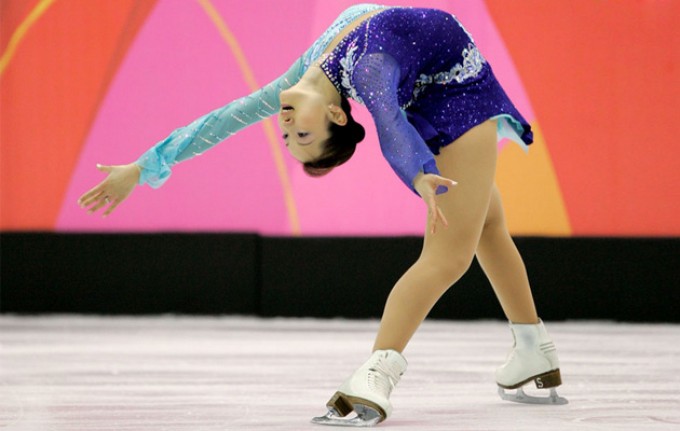
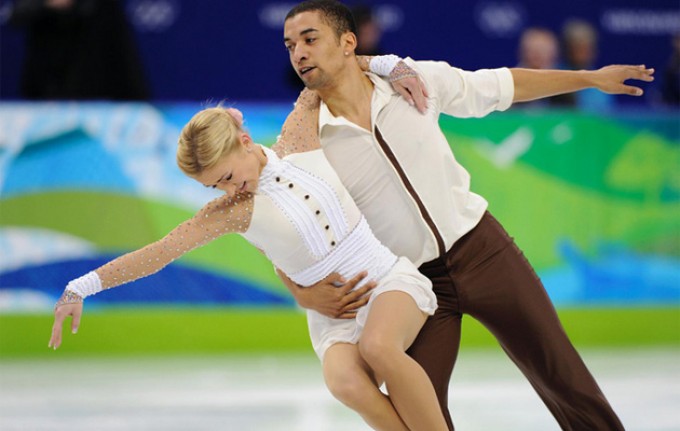


Figure skating has developed from a practical way to get around on ice into the elegant mix of art and sport it is today.
Early pioneers
The Dutch were arguably the earliest pioneers of skating. They began using canals to maintain communication by skating from village to village as far back as the 13th century. Skating eventually spread across the channel to England, and soon the first clubs and artificial rinks began to form. Passionate skaters included several kings of England, Marie Antoinette, Napoleon III and German writer Johann Wolfgang von Goethe.
Steel & Ballet
Two Americans are responsible for the major developments in the history of the sport. In 1850, Edward Bushnell of Philadelphia revolutionised skating when he introduced steel-bladed skates allowing complex manoeuvres and turns. Jackson Haines, a ballet master living in Vienna in the 1860s, added elements of ballet and dance to give the sport its grace.
Oldest sport
Figure skating is the oldest sport on the Olympic Winter Games programme. It was contested at the 1908 London Games and again in 1920 in Antwerp. Men’s, women’s, and pairs were the three events contested until 1972. Since 1976, ice dancing has been the fourth event in the programme, proving a great success.
Hollywood star
Sonja Henie made her Olympic debut in Chamonix in 1924, aged just 11, and was so nervous she had to ask her coach what to do midway through her routines. However, she won gold in the next three Olympic Games and developed a huge legion of fans. She later moved into films, where she greatly increased the popularity of her sport.
Source: olympic.org
Boot
Olympic figure skaters wear boots that are custom-made for each foot and heavily reinforced with thick, stiff leather interiors and extra ankle bracing.
Boot tongue
Figure skates are made with wide tongues, with rubber or sponge padding for flexibility. Skates should be tied tightly to afford maximum control.
Blade
A modern blade has a very slight curve, equal to the radius of 180-220 cm. The blade is sharpened to produce a flat or concave cross section. To maintain a sharp edge, the bottom quarter inch of the blade is made from time-tempered steel. The “sweet spot” of the blade is below the ball of the foot.
Heel
Skating boots originally were street boots, and heels have always been part of the look. Different figure skaters prefer different size heel – ice dancers often wear high heels, which push their body weight forward onto the balls of their feet for deeper edges and better control of quick steps and changes of direction.
Hollow
The groove down the middle of the bottom of a figure skate blade is called the hollow. Finely ground edges on either side of the hollow provide control and speed. The depth of the hollow varies depending on the skater’s event, weight and style.
Toe picks
Teeth cut into the toe of the blade are used for pushing off in jumps and as the pivot point during spins.
Source: olympic.org
Axel jumps
Named after its Norwegian inventor, Axel Paulsen, the Axel jump is easily recognised: it is the only jump that takes off from a forward position. Skaters launch into the air from their forward outside edge and land on the back outside edge of the opposite
Blade
Modern figure skate blades are curved slightly. Only the bottom quarter-inch of a blade is made from time-tempered steel to maintain a sharp edge. The “sweet spot” of the blade is below the ball of the foot.
Camel spin
A spin on one leg with the non-skating or free leg extended parallel to the ice and the upper body pitched forward, arms extended.
Combination
Two skills performed with one immediately after the other are said to be done in “combination.” In a combination jump, for example, the skater must not turn or change feet between jumps, i.e., the second jump must take off from the same foot that the first jump landed on.
Combination spin
A sequence in which the skater changes feet and positions while maintaining speed throughout a continuous spin.
Composition required element mark
The first of two marks awarded in the original dance. Judges consider the programme”s use of the ice surface, originality, difficulty, sureness and unclusion of the required elements.
Compulsory dances
The compulsory dance are each worth 10 percent of the team”s total score in ice dancing. All skaters perform the same two dances which are of 2 different rhythms. There are 6 different selections of music for each dance. Each of the two dances has specific steps that must be done in an exact manner. Teams receive one technique mark and one timing/expression mark for each dance.
Crossover
A method of gaining speed in which skaters cross one foot over the other. There are forward and backward crossovers.
Draw
The starting order for each event in a figure skating competition is determined by a lottery or “draw.” Either the referee or chair of the competition conducts the process in the presence of other judges (closed draw) or in an open setting where the athletes actually draw a number from a pouch (open draw).
Edge jump
A jump in which the skater takes off from his or her skating foot without bringing the free foot in contact with the ice to assist the takeoff is referred to as an “edge jump.” The Axel, loop and Salchow are common edge jumps.
Flip jump
A toe pick-assisted jump launched from the back inside edge of one foot and landed on the back outside edge of the opposite foot.
Flying sit spin
A jump spin in which the skater leaps off the ice, assumes the sitting position at the peak of the jump, and lands in a similar sitting position on the same or other foot.
Free dance
The free dance, which counts for 50 percent of an ice dance team”s total score, has fewer restrictions than other parts of ice dance but there are required and specified elements that must be included. Skaters select the mood and tempo of their music and are allowed four minutes to display a full range of technical skills and inventiveness using choreography of their own design. Teams receive one technical merit mark and one presentation mark.
Free skating
The free skate counts for 66.7 percent of a skater or team”s final score in the singles and pairs competitions, and is skated second (following the short programme). Skaters select their music and craft their choreography to best display their technical and artistic skills. The free skate is limited to four and a half minutes for men and pairs, and four minutes for ladies.
Hand-to-hand lasso type lifts
Overhead lifts in which the lady rotates already on the way up (contrary for example to the loop lift).
Hydrant lift
A lift in which the man throws his partner over his head while skating backwards, rotates one-half turn and catches her facing him.
Layback spin
Generally performed by women, the layback spin is a variant of the upright spin. The skater arranges her arms in a circle in front of her body, arches her back, and looks toward the ceiling while spinning.
Line
A skater”s carriage and position relative to the ice is referred to as his or her “line.” The term is also used in ballet and dance.
Long programme
Slang for the free skating portion of the singles and pairs competitions.
Loop jump
An edge jump launched from a back outside edge and landed on the same back outside edge.
Lutz jump
A toe-pick assisted jump launched from a back outside edge and landed on the back outside edge of the opposite foot. The skater glides backward on a wide curve, taps his toe pick into the ice and rotates in the opposite direction of the curve. The jump is named after its inventor, Austria”s Alois Lutz.
Marks
Judges award marks to each skater/pair ranging from 0 to 6 based on the following scale: 0 = Not skated 1 = Very poor 2 = Poor 3 = Mediocre 4 = Good 5 = Very good 6 = Outstanding Tenths represent gradations of opinion (i.e. a 4.5 is between good and very good).
Mirror skating
Opposite movements performed by pair of skaters in close proximity to one another.
Platter lift
A lift in which the man raises his partner overhead with his hands resting on her hips and she extends her body horizontal to the ice in a position that resembles a waiter holding a platter.
Presentation mark
The second of two marks awarded in the singles and pairs short programme and free skate, and the original and free dance. Judges consider the programme”s conformity to the music and the skaters” variation of speed, use of the ice surface and space, carriage and style, originality and expression.
Quadruple jump
Any jump of four or more, but less than five, revolutions.
Referee
Referees have full authority over all aspects of an event. It is the referee”s responsibility to ensure that all rules are observed, that a high standard of judging is maintained, and that all technical aspects of the competition are satisfactory. The referee also assesses the marking of the judges, holds a post event review meeting, and writes a report on the performance of the skating and the judges for the ISU technical committees concerned.
Required elements mark
The first of two marks awarded in the singles and pairs short programme (the presentation mark is the second). Judges evaluate skaters” execution of eight required skills.
Salchow
An edge jump launched off the back inside edge of one foot and landed on the back outside edge of the opposite foot. Named after its originator, Ulrich Salchow, who won ten World Championships titles from 1901 to 1911.
Scratch spin
One of the most basic of all spins, the scratch spin is one of the hardest to do correctly. It consists of the skater standing up straight over the left leg while spinning on an inside edge. The right leg is extended in front of the body with the thigh raised high, and the arms are up and out to the side. Bringing in the free leg and arms accelerates the spin.
Shadow skating
Identical movements performed by a pair of skaters in close proximity to one another.
Short programme
The short programme counts for 33.3 percent of a skater or team”s final score in singles and pairs, and is skated first (ahead of the free skating). The short programme is not more than 2 minutes, 40 seconds long and comprises eight standard (“required”) elements performed by all competitors.
Single jump
Any jump of one or more, but less than two, revolutions.
Sit spin
A spin in a sitting position close to the ice with the skating (spinning) leg bent at the knee and the non-skating or “free” leg extended.
Spins
Skills in which skaters rotate on their vertical axes while maintaining contact with the ice with one or both skates.
Spiral
A move in which skaters demonstrate flexibility and a fluid line by extending the non-skating leg behind them into the air during a long glide.
Star lift
A lift in which the man raises his partner by her hip from his side into the air and she assumes a scissors position with one hand touching his shoulder or in a hands-free position.
Starting order
The result of the draw, the starting order lists the sequence in which skaters will compete and the groups they will warm up with prior to competition.
Step sequence
A sequence of steps that immediately follow one another, executed in time to the music.
Technical merit mark
The first of two marks awarded in the singles and pairs free skating and the free dance (the presentation mark is the second). Judges evaluate the programme”s difficulty, variety, sureness and speed.
Technique mark
The first of two marks awarded in the compulsory dance in ice dancing (the timing/expression mark is the second). Judges evaluate the dance steps” placement and conformity to appropriate diagrams and descriptions, the couple”s movement in unison, body positions, style, and sureness.
Throw jump
A pairs move in which the lady partner is thrown in the air by the man and lands without assistance on a backward outside edge. Depending on the number of revolutions of the lady, throw jumps can be single, double, triple or quadruple.
Timing/expression mark
The second of two marks awarded in the compulsory dance in ice dancing (the technique mark is the first). Judges evaluate the timing of the skaters” steps in relation to the music and the clarity of the expression of the dance.
Toe overhead lift
A lift in which the man swings his partner from one side of his body around behind his head and into a raised position. She faces the same direction as the man in a split position.
Toe picks
Teeth cut into the toe of the blade are used for pushing off in jumps and as the pivot point during spins.
Triple jump
Any jump of three or more, but less than four, revolutions.
Twist lift
A pairs lift in which the man lifts his lady partner over his head and tosses her in the air, where she rotates and then is caught and placed back on the ice. Depending on the number of revolutions of the lady twist lifts can be single, double, triple or quadruple.
Upright spin
Executed forward or backward, the basic upright position consists of an erect posture and free foot held next to the skating foot with the side of the toe touching the calf of the skating leg.
Waltz jump
Skaters launch into the air from their forward outside edge and complete a half rotation. Basically half an Axel, the waltz is rarely performed in competition.
Source: olympic.org