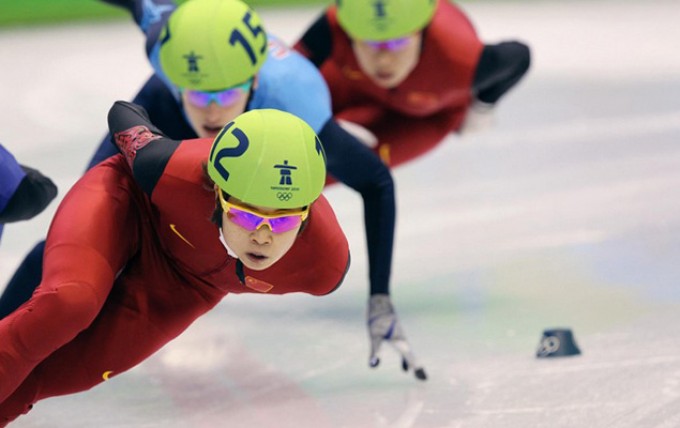
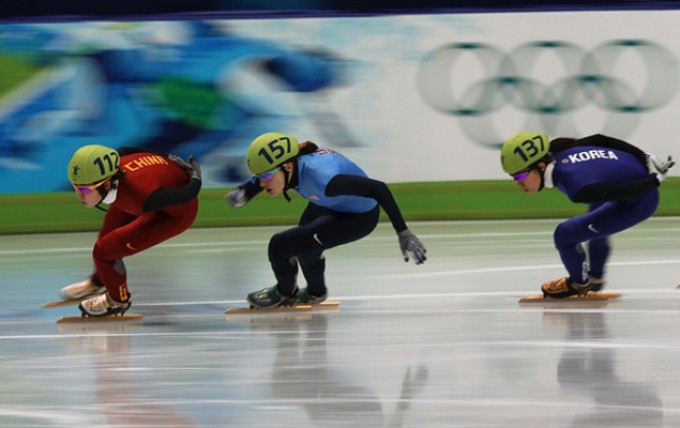
In short track speed skating, athletes compete not against the clock, but against each other. This introduces the elements of strategy, bravery and skill needed for racing.
European origin
Short track (or indoor) speed skating began in Europe at the end of the 19th century. However, it quickly spread to the United States and Canada, where it became extremely popular. Subsequently, from 1906, these countries began competing against each other on an annual basis.
American influence
The sport’s rise in popularity was partly thanks to the North American racing rules, which introduced mass starts and a “pack” style of racing. Capitalising on this, the organisers of the 1932 Lake Placid Games, with the consent of the International Skating Union (ISU), agreed to follow these rules for the programme’s speed skating events.
Olympic history
After having been a demonstration sport at the 1988 Games in Calgary, short track speed skating became part of the Olympic programme in Albertville in 1992, with two individual events and two relays. The discipline comprises men’s and women’s events. Since the 2006 Olympic Games in Turin, the programme of this discipline has included eight events.
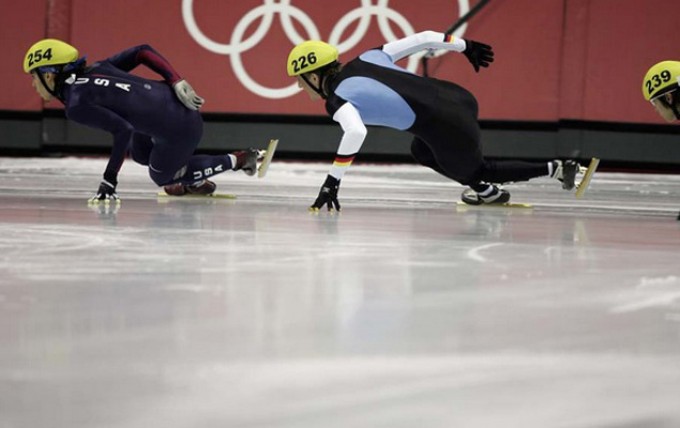
It quickly became popular with the public, who are thrilled to watch rapid races on tight tracks. The skaters race so closely to each other that collisions and falls are inevitable, which is why the walls of the speed skating oval are padded.
Asian emergence
In recent Games, China and Korea have emerged to challenge North American dominance in this event. Indeed at the 2006 Turin Games, it was South Korea who emerged as the nation to beat, winning an incredible six gold medals, and 10 medals in total.